Monday, August 19, 2013

Asheville Chamber of Commerce and Visitors Center

Asheville Chamber of Commerce 
36 Montford Avenue  Asheville, NC 28801
828.258.6114 


Our first stop was the Asheville chamber of commerce and visitor center which has tons of free literature, brochures and maps. We grabbed two bags full then hopped on the Gray line Historic trolley for a very informative tour of Asheville. "I did this when I was in Rome and found it to be the best way to see a city".

There is free parking at the visitors center so you can leave your car there with no worries and hop on the trolley.  I don’t think we could have figured out Asheville in our short stay without taking this tour so I highly recommend it for first time visitors.


What days do the tours operate?
Tours operate daily, seven days a week. March though December except Easter, Thanksgiving, Asheville Holiday Parade (November 23rd, 2013), Christmas Eve, Christmas, New Year’s Day and during Bele Chere Festival (July 26th - 28th, 2013).

How long does the tour last?
The tour (one complete loop) lasts approximately 1.5 to 1.75 hours.
There is an additional 15 minute stop at Asheville's new 'second to none' Visitor Center.
Or, take advantage of the hop-on/hop-off privileges, and make a day of it!

What does the tour cost?
Adults $21; Children (5-11 years) $10; children under the age of 5 ride free.
AAA and AARP members save $2 per adult fare.  Special pricing is available for groups of 10 or more.  Family Special (2 Adults + 2 Children) $46 total.

How and where can I purchase tickets?
Tickets are available at the Asheville Visitor Center, most tour stops, and at the front desk of many area hotels, inns and B&Bs.

NO TICKET?  NO PROBLEM.  BOARD THE TROLLEY AT ANY STOP AND PURCHASE YOUR TICKETS DURING THE TOUR.

Tickets may be purchased with cash or traveler's checks at all ticket locations.  Credit cards (American Express, MasterCard, Visa and Discover) are accepted at the Asheville Visitor Center and most, but not all other ticket locations.

Where can I catch the tour?
You can catch the tour at any of the 10 stops.  If you are driving to catch the tour however, the Asheville Visitor Center, located at 36 Montford Ave. just off I-240 at exit 4C, is the best place.  Free Parking and restrooms are available.

What does unlimited hop-on hop-off privileges mean?
You are welcome to ride the tour all the way through as a traditional bus type tour, or take advantage of the 10 different stops to explore and learn about the city.  Our RED trolleys come around to each stop at regular intervals outlined in the schedule, depending on the season.

Is the ticket good for two days?
Yes.  For one low price you can take full advantage of our hop-on hop-off feature by using the
RED trolley to tour the city for two consecutive days.  The pass is non-transferable.

Why is this tour Asheville's most popular?
For many reasons!  We offer a second day free, expanded departure schedule (seasonal),
risk-free money-back guarantee ~ but really our customers say it best.  See for yourself!

Additional Information:
AAA and AARP member discounts apply to adult fare passengers, and only upon presentation of a valid membership card for the Historic Tour.  Not valid in combination with any other discounts.

It may, under certain circumstances, be necessary to cancel a tour or change the tour route, stops and/or schedule of service,
without the benefit of prior notice.  Every effort will be made to minimize such occurrences.


The way to Asheville, NC


So this is the way we went ,Google, Maps says 10 hours but it took a little bit longer, I guess I drive slow. My dad wanted to take 95 down but Rt 81 South was a better choice because I think its more scenic plus there was absolutely no traffic. And yes we did run into some rain !!!


1.Take the Interstate 287 N ramp to Morristown/Mahwah
0.3 mi
2. Merge onto I-287 N
19.4 mi
3. Take exit 21B on the left toward I-78 W/Easton Pa
1.5 mi
4. Merge onto I-78 W
Partial toll road
Entering Pennsylvania
106 mi
5. Keep left at the fork, follow signs for Interstate 81/Harrisburg and merge onto I-81 S
Passing through Maryland, West Virginia, Virginia
Entering Tennessee
470 mi
6.Take exit 57A to merge onto I-26 E/US-23 S toward Asheville/Johnson City
Entering North Carolina

73.5 mi
7. Keep left at the fork, follow signs for Downtown/Patton Avenue and merge onto Patton Ave
1.1 mi
8. Turn right onto Broadway
39 ft
9.. Take the 1st left onto N Pack Square
79 ft

Asheville, NC

Saturday, August 17, 2013

Road trip to Asheville North Carolina.


Fast forward to last week,

I figure if I plan on retiring in a few years then I’d better start looking for another place to call home. Nothing personal but I don’t really like living in New Jersey. To many people, to much pollution and I should probably stop it there before I get carried away.

Anyway........ I’m into the great out doors; I love hiking, mountain biking, kayaking and more then anything I can really appreciate breathing fresh air, and I just cant get enough of that stuff here in the so called “Garden State” So the first chance I get, I’m out.

I've been looking around for cool places to live and North Carolina, Tennessee and New Hampshire have all caught my interest, So I plan on using my vacation time for road trips out to these states to see what they have to offer.

So the jeeps ready, new engine, new tire, just gassed her up and she’s ready to go. My first road trip will be to Asheville North Carolina.


Friday, August 16, 2013

The New Job

I f these blogs seem a little out of order that’s because they are, the new job gives me little free time to blog or anything else for that matter, so I’m trying to play catch up. 

Let me rewind back to April............


I’m loving the new job !! Way less stress then working behind a desk all day, “which I think is no life for a man”. Men were meant to roam the earth , hunt and build things......... not to sit inside all day pecking at a computer.....its just not natural. I didn't realize just how unhappy I was until I started working with my hands again. 


Thursday, August 15, 2013

“art takes time and time is money”

OK, so I haven’t blogged in a real long time, but this does not mean that I've lost my passion for my art. Oh no not at all. I've only come to the conclusion that the Kinks were right “art takes time and time is money”so I’m putting myself on a low budget so to speak..

I need more money !!! So I can buy more time!!! to become an artist!!!  WTF

I’ll sum it up in two words “Retirement Pension”!

I've been working at the same joint for 29 years now and I'm starting to see the light at the end of the tunnel. My game plan is simple  a) retire b) move to and affordable state with a thriving art community and c) devote myself to my art full time. Sounds like a good plan right, just wish it were that easy.

Problem is, the desk job I have now doesn't offer much over time, and pension numbers can increase quite well with over time, so when I sat down and did the math, it was clear that I was going to have to step out of my comfort zone to accomplish this goal.

So when a job came up in my department that offered a lot of over time, for the sake of my art......I had to take it .....The job that I took was a 24/7 truck road mechanic.


Sunday, July 14, 2013

Art books, a list of art books worth reading.

Drawing

The Practice and Science of Drawing by Harold Speed, Dover Publications, 2003 [Required]
The Human Figure by John H Vanderpoel, Dover Publications Inc, 2000
Charles Bargue and Jean-Leon Gerome: Drawing Course by Gerald M Ackerman, Graydon Parrish, 2007
Life Drawing by George Bridgman, Dover Publications Inc, 1972
FigureDrawing for all it’s worth by Andrew Loomis, 1943

Painting

Oil Painting Techniques and Materials by Harold Speed, Dover Publications, 1987
The Practice of Oil Painting and of Drawing as Associated with it by Solomon Joseph Solomon, Seeley, Co, 1941
The Science and Practice of Oil Painting by Harold Speed, Dover Publications, 1949

Anatomy

Atlas of Human Anatomy for the Artist by Stephen Rogers Peck, OUP USA, 1982
Constructive Anatomy by George Bridgman, Dover Publications Inc, 1974
Human Anatomy for Artists: The Elements of Form by Eliot Goldfinger, OUP USA, 1992
The Artist;s Guide to Human Anatomy by Gottfried Bammes, Dover Publication Inc 2004

Sculpture

Modelling and Sculpting the Human Figure, Edouard Lanteri, Dover Publications, Inc. New York 1965 [Required]
The Mouldmaker’s Handbook, Jean-Pierre Delpech and Mark-Andre Figueres, A & C Black, London 2001
Mouldmaking and Casting, Nick Brooks, The Crowood Press Ltd, Ramsbury 2005
Clay Modelling and Plaster Casting with numerous angravings and diagrams by Paul N Hasluck, Cassell and Company Limited, London, 1908
Looking at European Sculpture: A Guide to Technical Terms by Jane Bassett and Peggy Fogelman, Getty Publications, 1997
Modelling and Sculpture by Albert Toft, Dover Publications Inc, 2004
Modelling and Sculpting Animals by Édouard Lantéri, 1986 Modelling for Sculpture -
A Book for the Beginner by Gilbert Bayes, Winsor & Newton Ltd, London, 1932
Sculpture since 1945 by Edward Lucie-Smith, Universe Publishing, 1987
The Manual of Sculpting Techniques by John Plowman, A & C Black Publishers Ltd, 2003
The Sculpting Techniques Bible: An Essential Illustrated Reference for Both Beginner and Experienced Sculptors by Claire Waite Brown, Chartwell Books, 2006
The Technique of Sculpture by John W Mills, B T Batsford, 1965

ART TECHNIQUE

A Brush with God: An Icon Workbook by Peter Pearson, Continuum International Publishing Group, 2005
A Handbook of Anatomy for Art Students by Arthur Thomson, The Clarendon Press, Oxford, 1906
An Atlas of Animal Anatomy for Artists by W Ellenberger, Dover Publications Inc, 1966
An Introduction to Perspective by Ray Smith, 1995
Anatomical Diagrams for the Use of Art Students by James M Dunlop, G Bell & Sons, London, 1915
Anatomy: Anatomy for Students and Teachers by Walter T Foster, Foster Art Service Inc, 1970
Anatomy for Artists by John Marshall, Smith, Elder & Co, London, 1878
Anatomy Lessons from the Great Masters: 100 Great Figure Drawings Analysed by RobertBeverly Hale and Terence Coyle Watson-Guptill Publications Inc, US, 2007
Animal Anatomy for Artists: The Elements of Form by Eliot Goldfinger, Oxford University Press, 2004
Animal Painting and Anatomy by Frank Calderon, Dover Publications Inc, 1975
Animals in Motion by Eadweard Muybridge, Dover Publications Inc, 2000
Artists’ Pigments: A Handbook of Their History and Characteristics Vol I by Robert L Feller, Ashok Roy, Elizabeth West Fitzhugh, Oxford University Press, 1994
Artists’ Pigments: A Handbook of Their History and Characteristics Vol II by Ashok Roy (Editor), Oxford University Press, 1994
Artists’ Pigments: A Handbook of Their History and Characteristics Vol III by Elizabeth West Fitzhugh (Editor), Oxford University Press, 1994
Atlas of Human Anatomy for the Artist by Stephen Rogers Peck, OUP, USA, 1982
Botanical Illustration by Valerie Oxley, The Crowood Press Ltd, 2008Bridgman’s Complete Guide to Drawing from Life by George B Bridgman, Sterling, 2009
Capturing Radiant Light and Color in Oils and Soft Pastels by Susan Sarback, North Light Books, 2007
Carving Classic Female Faces in Wood: A How-To Reference for Carvers and Sculptors by Ian Norbury, Fox Chapel Publishing, 2006
Cast Drawing using the Sight Size Approach by Darren R Rausar, Velatura Press, 2007
Catalogue of Casts for Schools Including Casts of Most of the Statues which the Board of Education have approved in their Regulations for the Art Examinations, as suitable for Study in Schools of Art by William Binns Smith, D Brucciani & Co, London, 1922
Charles Bargue: Cours de dessin by Gerald M Ackerman, Art Creation Realisation, 2003
Classical Drawing Atelier by Juliette Aristides, Watson Guptill Publications/New York, 2006
Draw: How to Master the Art by Jeffery Camp, Dorling Kindersley, 1981
Drawing Hands and Feet: Form, Proportions, Gestures and Actions by Giovanni Civardi, Search Press Ltd, 2005
Drawing Landscapes by Ronald Swanwick, Search Press, 2001
Drawing Lessons from the Great Masters by Robert Beverly Hale, Watson Guptill Publications, New York, 1965
Drawing Light and Shade: Understanding Chiaroscuro by Giovanni Civardi, Search Press Ltd, 2006
Drawing Masterclass by Ron Bowen, Ebury Press, 1992
Drawing Realistic Textures in Pencil by J D Hillberry, North Light Books, 1999
Drawing, Seeing and Observation by Ian Simpson, A & C Black Publishers Ltd, 2003
Drawing the Draped Figure by George B Bridgman, Dover Publications Inc, 2001
Drawing the Female Form by George B Bridgman and Ben Pinchot, Dover Publications Inc, 2005
Drawing the Human Head by Burne Hogarth, Watson-Guptill Publications Inc, 1989
Dynamic Anatomy by Burne Hogarth, Watson-Guptill Publications Inc, US, 2003
Dynamic Figure Drawing: A New Approach to Drawing the Moving Figure in Deep Space and Foreshortening by Burne Hogarth, Watson-Guptill Publications, 1996
Dynamic Light and Shade: How to Render and Invent Light and Shade – The Key to Three-dimensional Form in Drawing and Painting by Burne Hogarth, Watson-Guptill Publications Inc, US, 1992
Dynamic Wrinkles and Drapery: Solutions for Drawing the Clothed Figure by Burne Hogarth, Watson-Guptill Publications Inc, US, 1995
Elmentary Artistic Anatomy of the Human Body by J Fau, Bailliere, Tindall & Cox, London, 1900
Formulas for Painters by Robert Massey, Watson-Guptill, New York, 1988
Heads, Features and Faces by George B Bridgman, Dover Publications Inc, 1975
How to Paint in Oils by Paul Wyeth and Tom Horobin, Elek Books, London, 1958Guide to Landscape Painting by J F Carlson, Dover Publications Inc, 1973Introduction to Water Colours by Ray Smith, Dorling Kindersley, 1998
Learning to Paint by Bernard Dunstan, Watson-Guptill Publications, 1972
Leonardo on Painting edited by Martin Kemp, Yale University Press, New Haven, 1989
Lessons on Shading by W E Sparkes, Dover Publications Inc, 2007
Life Drawing by Bridget Woods, The Crowood Press Ltd, 2003
Life Drawing in Charcoal by Douglas R Graves, Dover Publications Inc, 2003
Light and Colour in the Outdoors by M G J Minnaert, Springer, New York, 1993
Marine Painting by Francoise Coffrant, New Holland Publishers Ltd, 2008
Materials and Techniques of Medieval Painting by Daniel V Thompson, Dover Publications Inc, New York, 1956
Methods and Materials of Painting of the Great Schools and Masters Vols. I & II by Sir Charles Eastlake
Oil Painting by Stephen Bone, 1959
Oil Painting for the Serious Beginner: Basic Lessons in Becoming a Good Painter by Steve Allrich, Watson-Guptill Publications Inc, 2004
Oil Painting Secrets from a Master by Linda Cateura, Watson-Guptill Publications, New York, 1995
On Painting by Leon Battista Alberti, translated by John R Spencer, Yale University Press, New Haven, 1956
Original Treatises on the Art of Painting by Mary P Merrifield, Dover Publications Inc, New York, 1967
Painters on Painting edited by Eric Protter, Dover Publications Inc, New York, 1997
Painting: A Complete Guide by Kenneth Jameson, Thomas Nelson and Sons Ltd, 1975
Painting Better Landscapes: Specific Ways to Improve Your Oils by Margaret Kessler, Watson-Guptill Publications Inc, 1992
Painting in Oils by Bertram Nicholls, The Studio Publications, 1945
Painting Materials: A Short Encyclopedia by Rutherford J Gettens and George L Stout, Dover Publications Inc, New York, 1966
Painting Sea and Shore: A complete guide to the technique of Marine Painting in oils by Harry Russell Ballinger, Watson-Guptill Publications, 1966
Painting the Impressionist Landscape: Lessons in Interpreting Light and Color by Lois Griffel, Watson-Guptill Publications Inc, 2009
Painting the Outdoors Inside: Capture the Vitality of Outdoor Painting in Your Studio with Oils by Kevin Macpherson, North Light Books, 2007
Perspective for Artists by Rex Vicat Cole, Dover Publications Inc, New York, 1976
Perspective Made Easy by Ernest Norling, Dover Publications Inc, 1999
Portrait Painting by Margaret Fitzhugh Browne, I Pitman & Sons, 1933
Portrait Painting Step by Step by Frank Slater, Jenkins, 1963
Problem Solving for Oil Painters: Recognizing What’s Gone Wrong and How to Make It Right by Gregg Kreutz, Watson-Guptill Publications Inc, 1997
Raw Colours with Pastels by Mark Leach, Batsford Ltd, 2009
Sea and Sky in Oils by Roy Lang, Search Press Ltd 2007
Starting to Paint Still Life by Bernard Dunstan, Studio Vista, 1969
The Art and Technique of Oil Painting by Frederic Taubes, 1963
The Artist & the Nude – An Anthology of Drawings by Mervyn Levy, Barrie & Jenkins Ltd, Norwich, 1970
The Artist’s Complete Guide to Drawing the Head by William Maughan, Watson-Guptill Publications Inc, US, 2004
The Artistic Anatomy of the Horse: A brief Description of the various Anatomical Structures by Hugh W Armstead, Bailliere, Tindall and Cox, London, 1900
The Artist’s Complete Guide to Drawing the Head by William Maughan, Watson-Guptill Publications Inc, US, 2004
The Artists’ Craft by James Ayres, Guild Publishing, 1985
The Artist’s Guide to Animal Anatomy by Gottfried Bammes, Dover Publications Inc, 2005
The Artist’s Handbook of Materials and Techniques by Ralph Mayer, 1991
The Book of a Hundred Hands by George B Bridgman, Dover Publications Inc, 1972
The Book of Art: Cennino Cennini edited by Daniel V Thompson, Yale University Press, New Haven, 1932
The Complete Guide to Painting Water by Bert N Petri, North Light Books, 2008
The Encyclopedia of Pastel Techniques: A Unique A-Z Directory of Pastel Painting Techniques
Plus Guidance on How Best to Use Them by Judy Martin, Search Press Ltd, 2001
The Encyclopedia of Watercolour Techniques: A Step-by-step Visual Directory, with an Inspirational Gallery of Finished Works by Hazel Harrison, Search Press Ltd, 2004
The Enjoyment and Use of Color by Walter Sargent, Dover Publications Inc, New York, 1923
The Golden Section by Hans Walser, Mathematical Association of America, 2001
The Human Figure in Motion by Eadweard Muybridge, Dover Publications Inc, 2000
The Human Machine by George B Bridgman, Dover Publications Inc, 1972
The Materials of the Artist by Max Doerner, Harcourt Brace International, 2003
The Nude: Understanding the Elements of Life Drawing by Giovanni Civardi, Search Press Ltd, 2007
The Oil Painter’s Bible: The Essential Reference for the Practicing Artist by Marilyn Scott, Search Press Ltd, 2005
The Oil Painter’s Pocket Palette by Rosalind Cuthbert, Search Press Ltd, 2008
The Painter’s Methods and Materials by A P Laurie, Dover Publications Inc, New York, 1967
The Pastel Artist’s Bible by Claire Waite Brown, Search Press Ltd, 2006
The Pastel Handbook by Ettore Maiotti, BCA, 1991
The Pastel Book by Bill Creevy, Watson-Guptill Publications Inc, 1999
The Pastelist’s Year: Painting the Four Seasons in Pastel by Elizabeth Mowry, Watson-Guptill Publications Inc, 2001
The Rudiments of Figure Drawing by Roland Alston
Traditional Oil Painting: Advanced Techniques and Concepts from the Renaissance to the Present by Virgil Elliott, Watson-Guptill Publications, 2007
Watercolour Flower Portraits by Billy Showell, Search Press Ltd, 2006
Watercolour Fruit and Vegetable Portraits by Billy Showell, Search Press Ltd, 2009

Friday, May 24, 2013

John Singer Sargent Notes


Here are some painting notes attributed to John Singer Sargent

1. Painting is an interpretation of tone. Colour drawn with a brush.

2. Keep the planes free and simple, drawing a full brush down the whole contour of a cheek.

3. Always paint one thing into another and not side by side until they touch.

4. The thicker your paint—the more your color flows.

5. Simplify, omit all but the most essential elements—values, especially the values. You must clarify the values.
6. The secret of painting is in the half tone of each plane, in economizing the accents and in the handling of the lights.

7. You begin with the middle tones and work up from it . . . so that you deal last with your lightest lights and darkest darks, you avoid false accents.

8. Paint in all the half tones and the generalized passages quite thick.

9. It is impossible for a painter to try to repaint a head where the understructure was wrong.

PALETTE: Silver White, Naples Yellow, Yellow Ochre, Ochre dew (English Red), Red Ochre, Vermillion, Ivory or Coal Black, and Prussian Blue.

Thursday, April 25, 2013

Abbott Handerson Thayer’s "The Virgin" study.


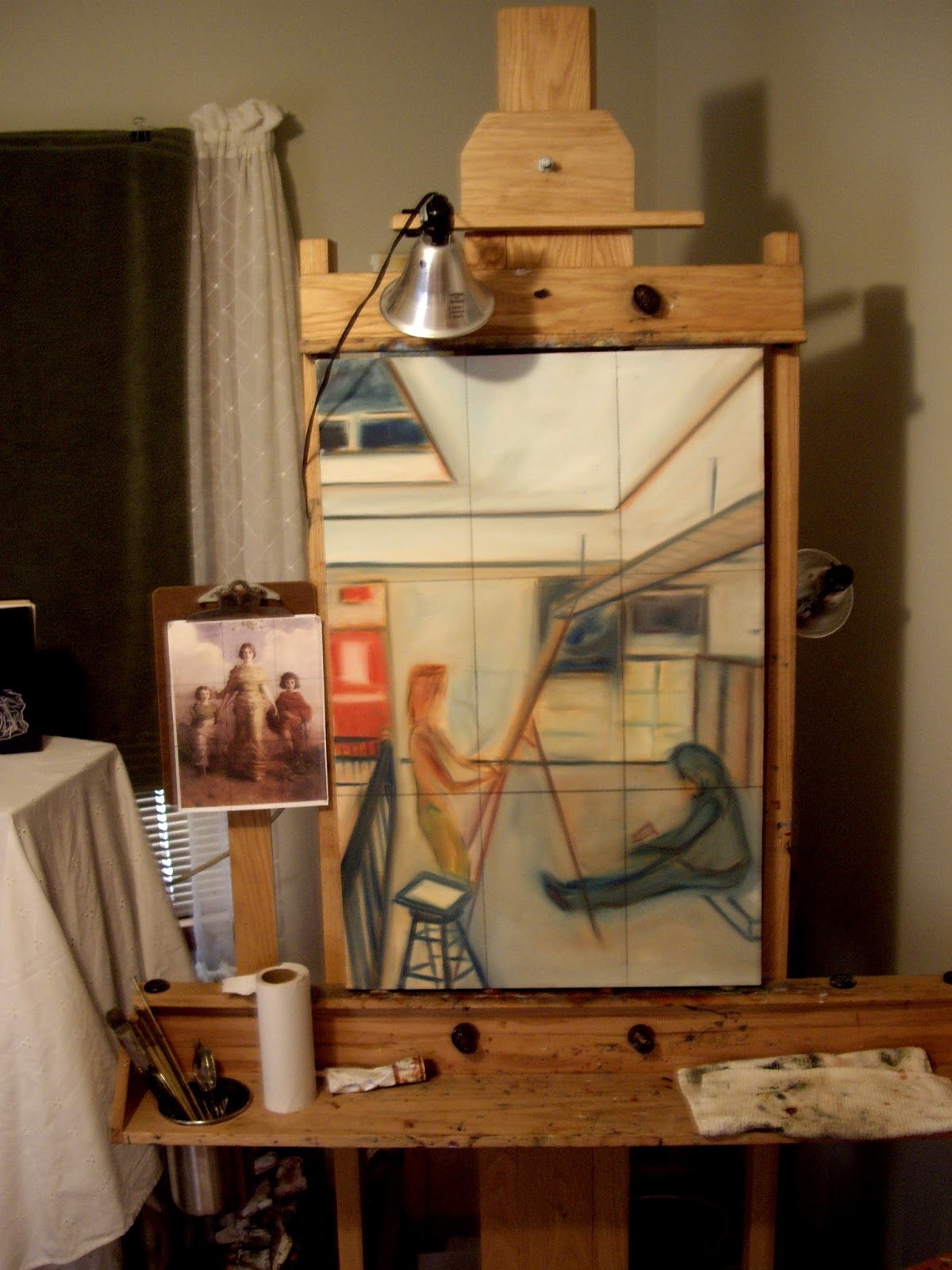
I started a new job that has me working late hours and weekends, so I haven’t had much free time to blog or paint lately, but I thought I’d post something that I started last month. Don’t know when I’ll get to finish it but it’s a study of Abbott Handerson Thayer’s The Virgin. As you can see I recycled an old canvas of a painting that I never finished. Sure hope I get to finish this one!


Sunday, March 31, 2013

30 WAYS TO LIVE LIFE TO THE FULLEST

Maybe living a meaningful, passionate life has nothing to do with its length and everything to do with its width.


1. Live in the moment. Forget the past and don’t concern yourself with the future. (Tanner Christensen)

2. Fully embrace the now, no matter what the situation. (Patrick Flynn)
3. Do the things you love. (Diego Felipe Villa Serna)
4. Learn to forgive and embrace unconditional love. (Ann Glasgow)
5. Live every day as if it’s your last, embracing each experience as if it’s your first. (Jennifer Fertado)
6. Believe in “live and let live.” (Satyendra Pandey)
7. Use quiet reflection, honesty, and laughter. (Erin Rogers Kronman)
8. Be other-centered. (Tricia Mc)
9. Find calm in making art. (Z.r. Hill)
10. Focus on today and how you can do your best to live it to the fullest.  (Amelia Krump)
11. Participate in life instead of just watching it pass you by. (Lindsey Wonderson)
12. Stay healthy, eat right and most importantly, be kind to all. (Tho Nguyen)
13. Pray, forgive yourself, appreciate others, listen to your gut, do things you enjoy, and remind yourself that we are all loved and connected. (Sandra Lumb)
14. Don’t sweat the small stuff. (Allison Gillam)
15. Question everything, keep it simple, and help whenever and however you can. (Lynda Corrigan Sutherland)
16. Try to enjoy every minute of every day. (Maria Ahlin)
17. Appreciate life’s every second. (Anna-Karin Boyaciyan-Demirciyan)
18. Step through new doors. The majority of the time there’s something fantastic on the other side. (Terri Mindock)
19. Remember that all is a gift, but the most precious of all gifts is life and love. (Debbie Teeuwen)
20. Keep your spirit free, be flexible, let go. (Leslie Brown)
21. “Do one thing every day that scares you.” -Baz Luhrmann (Adam Raffel)
22. Don’t attach to outcomes. (Wp Ho)
23. Spend as much time with a two year old as possible. (Jackie Freeman)
24. Enjoy each and every moment of life. Every day is a new challenge and opportunity to discover something new. (Chirag Tripathi)
25. Budget travel. It is always an adventure! You get to enjoy what fate has to offer with limited means. (Ruby Baltazar)
26. Be honestly thankful for every breath you take. (Jonathan Carey)
27. Just be. (Catherine Halvorsson)
28. “Trust yourself. Trust your own strengths.” ~Gaundalf the grey (Jonathan David Evan Fulton)
29. Pause momentarily before everything you do so that you notice everything you should or could notice. (Scott Hutchinson)
30. Follow your hopes and not your fears. (Jody Bower)
What have you done today to live life to the fullest?


Saturday, February 23, 2013

Winged Victory cast sketch in oil

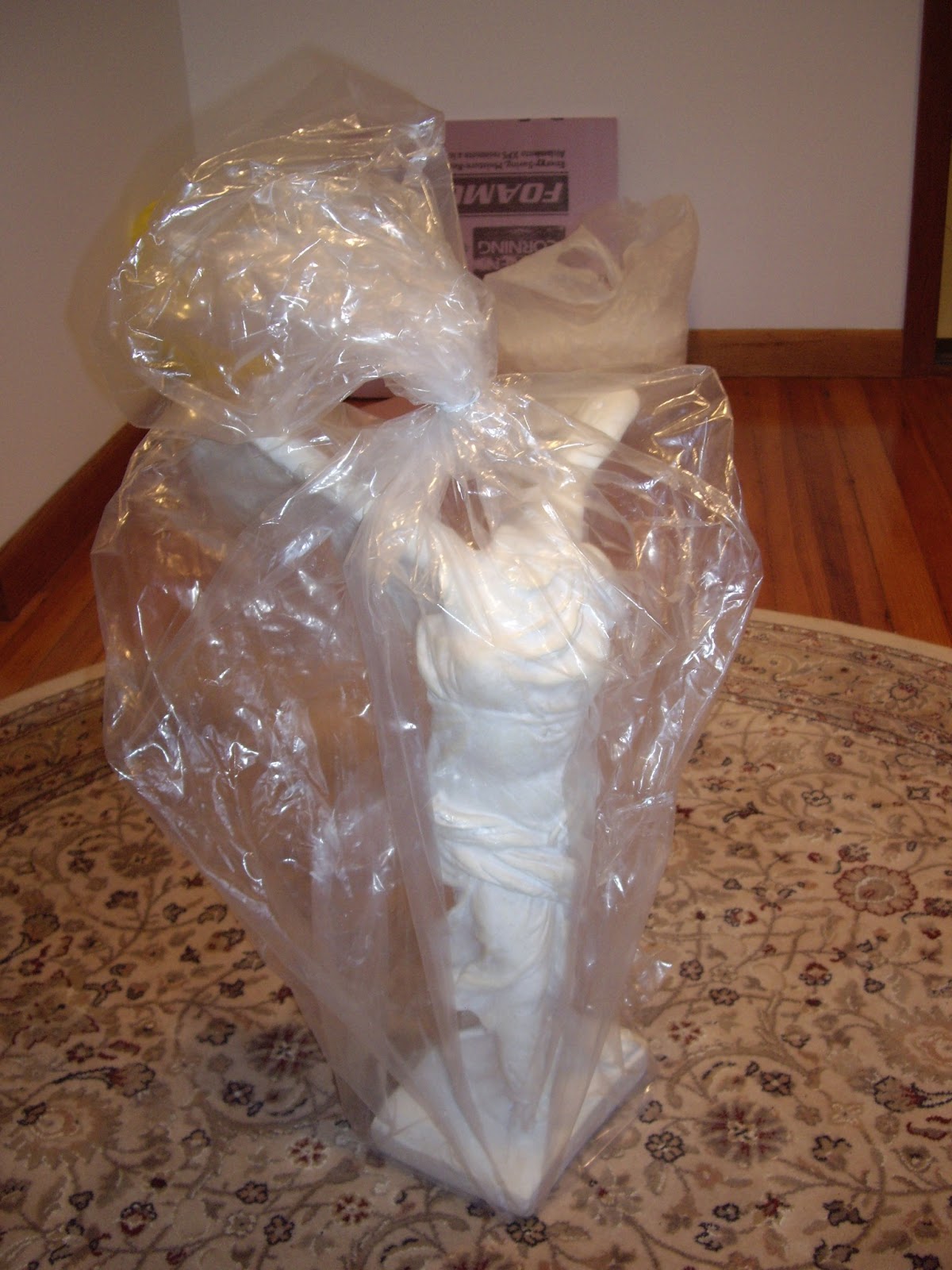
I set up my new winged victory today  to do a cast study sketch.

I hung a dark towel behind it so the light color of the cast figure would stand out, then I used a spot light from above as the one and only light source, That made the room kind of dark but it also produced a maze of cast shadows as you can see from the second picture.


Today's figure sketch


Sunday, February 17, 2013

Saturday, February 16, 2013

Red Chalk Drawing

Saturday Morning, I got up early to get in some drawing practice, I did a bunch of loose figure sketches using Mike Mattesi's method of drawing force, then I went ahead and started shading in a few. 


Sunday, February 10, 2013

The Giust Gallery sculpture reproductions, The Winged Victory of Samothrace


After doing much research I finely decided to purchase my first quality cast from The Giust Gallery located in Woburn, MA. They offer a wide selection of sculpture reproductions many of which are from the original castings, made by Caproni over 100 years ago. Since 1992 The Giust Gallery has been owned by Robert Shure (a renowned sculptor in his own right). Cast reproductions are made from gypsum plaster and water mixed. Casts require multiple layers to form the required thickness. The last layer is reinforced with burlap fibers or metal pipe.

Shipment to New Jersey took about 2 weeks and I couldn't have packed it better myself. It took some time and care to get through the foam box lining, shipping peanuts and taped on bubble wrap, but once I got the 19 inch tall The winged Victory of Samothrace  out of the box I couldn't have been more pleased.. The size, weight and detail of the figure are just what I was hoping for. 

They also make the Samothrace in larger sizes ( 29" & 39" inches) and a variety of patinas, the one pictured here is White Patina.


Museum quality sculpture reproductions


In the wake of  hurricane Sandy and the recent snow storm I've been putting in a lot of overtime at work. So besides being totally exhausted..... I guess I have a few extra bucks in my pocket to spend on what I consider a luxury as well as an essential tool for learning how to draw in the traditional way of the European academies.

That’s right I talking about the traditional plaster casts of European classic sculptures. So for all of us who can’t get out to the Louvre to practice drawing these things from life, this will be the next best thing.

My only problem was where to get museum quality sculpture reproductions at a fair price, as I was to find out, shopping on line for stuff like this can be a daunting task, with all the plastic cheap junk out there it's hard to tell what your really getting for your money without physically seeing it in the real world.

So after spending way too much time on line looking at these things, I thought I’d give a little review on what I came up with, perhaps what I've found will be useful for someone who may be considering buying casts to study but are hesitant, because of the lack of visual information available on line.


Saturday, December 29, 2012

Figure Drawing Practice


Mechanical Pencils

I put the charcoals away and started using mechanical pencils . With the variety of tools I feel like I have more control to draw lighter, keeping the drawing open longer so I can make adjustments and changes as needed.


Drawing Practice


Wednesday, December 12, 2012

Figure Sketches


I haven't had much time to blog lately, Hurricane Sandy has kept me busy at work,and even though I missed a few classes I've been trying to keep active by drawing at home. My mission is to practice figure drawing at least three times a week.

Here are some charcoal figure sketches  from class and my home studies.


Wednesday, October 3, 2012

Figure Drawing Classes at the Arts Guild of New Jersey


I was happy to see that this semester the Arts Guild of New Jersey has offered figure drawing and portrait painting classes, just what I needed to get back into it after a long summer off !


Monday, September 17, 2012

The Newark Museums traveling loan exhibition, Angels & Tomboys: Girlhood in 19th-Century American Art


Angels & Tomboys: Girlhood in 19th-Century American Art is a major traveling loan exhibition, which is the first to examine nineteenth-century depictions of girls in paintings, sculpture, prints and photographs. Featuring approximately 80 masterworks by John Singer Sargent, Thomas Eakins, Winslow Homer, Cecilia Beaux and William Merritt Chase, the exhibition analyzes the myriad ways that artists 
vigorously participated in the artistic and social construction of girlhood while also revealing the hopes and fears that adults had for their children. While the sentimental portrayal of girls as angelic, passive and domestic was the pervasive characterization, this project also identifies and investigates compelling and transgressive female images including tomboys, working children and adolescents.